
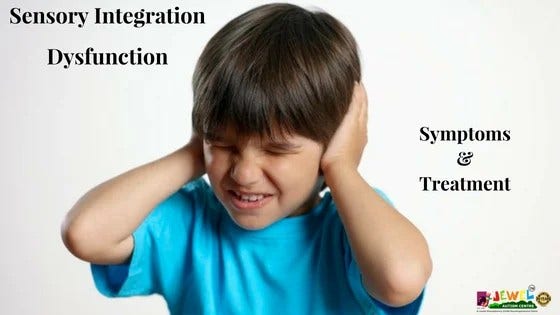
Sensory integration dysfunction is the ability to process certain information received through the sense. When an individual has sensory integration dysfunction he/she may be unable to respond to certain sensory information to plan and organize what he/she needs to do in an appropriate and automatic manner.
Person suffering from sensory integration dysfunction responds negatively to unexpected /loud noise.
SYMPTOMS
Dysfunction can affect each person in different ways and to varying degrees.
AUDITORY :
- responds negatively to unexpected /loud noise
- holds hands over ears
- cannot work with background noises
VISUAL :
- prefers to be in the dark
- hesitates going up and down steps
- avoids bright lights
- avoids eye contact
TASTE/SMELL
- Avoids certain taste /smell that are typically part of children’s diet
- routinely smells nonfood items
BODY POSITION
- continually seek out all kind of movement activities
- hangs on other people, furniture, objects
- seems to have weak muscles
MOVEMENT
- Become anxious /distressed when feet leave the ground
- avoids climbing and jumping
- avoids playground equipmentS
TOUCH
- Avoids getting messy in glue, sand, finger paint
- in sensitive to certain fabrics
- touches people and objects an irritating level
ATTENTION, BEHAVIOUR AND SOCIAL
Jumping from one activity to another
- difficulty in paying attention
- seems anxious
- has difficulty in making friends, does not express emotions
MANAGEMENT STRATEGIES THAT HELP THE CHILD WITH SENSORY INTEGRATION DYSFUNCTION
- giving advance notice of change to routine
- expanding abilities: actively working on broadening their range of skill areas and interests.
- sensory diet
- To providing feed back to the body to enable it to sensory regulate..
- Recognize triggers
- Educate the child’s adults cares of the trigger that spark in appropriate sensory reaction
- M. O. R.E program uses motor components, oral organization, respiratory demands and eye contact to assist with sensory regulation.