
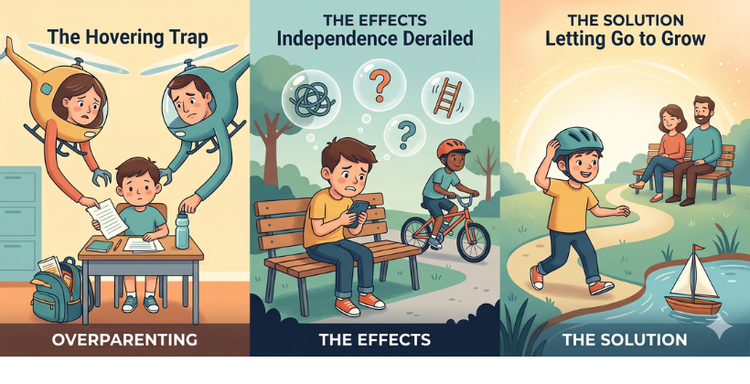
When we hear the word "helicopter," we might think of the famous helicopter shot of Indian cricketer MS Dhoni. But when it comes to parenting, the term "helicopter parenting" refers to something completely different. It's a type of parenting style where the parents hover over their children like a helicopter, monitoring and controlling every single aspect of their lives.
While helicopter parenting comes from a place of love and protection, it can actually do more harm than good. In this article, we'll take a closer look at what helicopter parenting is, how it affects children, and how you can avoid it.
What is Helicopter Parenting?
Helicopter parenting is a parenting style that is characterized by over-involvement in a child's life. Helicopter parents are always there, monitoring and controlling everything their child does. They want to make sure their child is safe and successful, but their overprotectiveness can prevent their child from developing essential life skills.
Some common signs of helicopter parenting include:
Always being there: Helicopter parents are always around, ready to jump in and solve any problem their child might have.
Controlling: They try to control every aspect of their child's life, from who they hang out with to what activities they participate in.
Over-involved: They are constantly checking in on their child, asking questions, and monitoring their progress.
The Effects of Helicopter Parenting
Helicopter parenting can have a negative impact on a child's development. Here are some of the ways it can affect them:
Lack of independence: Because helicopter parents do everything for their children, they don't learn how to be independent. They may struggle to make decisions and solve problems on their own when they grow up.
Anxiety and stress: Constantly being monitored and controlled can cause children to feel anxious and stressed. They may worry about making mistakes and not meeting their parents' expectations.
Low self-esteem: When parents do everything for their children, it sends a message that they don't trust them to do things on their own. This can lead to low self-esteem and a lack of confidence.
How to Avoid Helicopter Parenting
If you think you might be a helicopter parent, don't worry. It's not too late to change. Here are some steps you can take to avoid helicopter parenting and help your child become more independent:
Give them space: Allow your child to have some time to themselves to explore and discover their own interests.
Let them make mistakes: Making mistakes is a natural part of learning and growing. Let your child make mistakes so they can learn from them.
Encourage independence: Encourage your child to do things on their own, like dressing themselves, packing their own bag for school, and doing their homework.
Conclusion
Helicopter parenting may seem like a good way to protect your child, but it can actually hold them back. By giving them some space and encouraging independence, you can help them develop the skills they need to navigate the world on their own.
I hope you found this blog post helpful! Please let me know if you have any questions.