
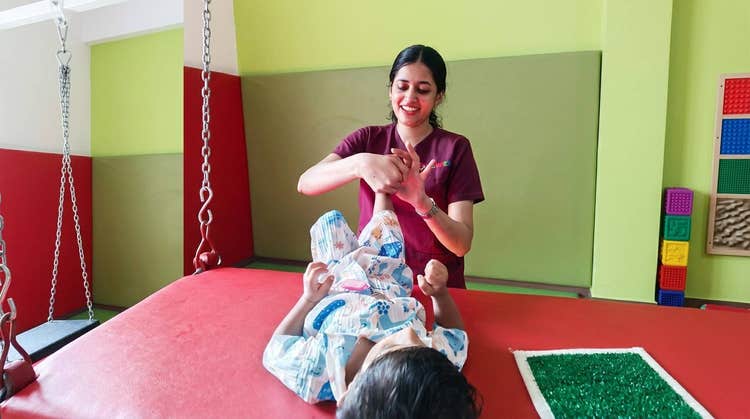
Tone management is an important part of supporting children with spastic cerebral palsy. Spasticity causes muscles to become stiff and tight, making movement, posture, balance, and daily activities difficult. Proper tone management helps improve comfort, mobility, independence, and participation in everyday life.
1.Stretching Exercises
Stretching helps reduce muscle tightness and maintain joint flexibility. Gentle passive and active stretching of tight muscles such as the hamstrings, calf muscles, hip adductors, and upper limb muscles. Regular stretching helps prevent muscle shortening and joint contractures while improving range of motion.
2.Positioning and Postural Management
Proper positioning helps reduce abnormal muscle tone and promotes better alignment.Adaptive seating systems, standing frames, wedges, and supportive cushions may be used to maintain proper body alignment.
3.Balance and Coordination Training
Balance exercises improve stability during sitting, standing, and walking. Physiotherapy may include activities such as reaching tasks, balance board exercises, weight shifting, and gait training. These activities help children gain confidence and improve functional mobility.
4.Neurodevelopmental Treatment (NDT)
Neurodevelopmental techniques are commonly used in physiotherapy to promote normal movement patterns and reduce abnormal reflexes or postures. Therapists guide the child through controlled movements and functional activities to improve motor control and body awareness.
5.Weight-Bearing Activities
Weight-bearing activities help improve muscle strength, bone health, and joint stability. Standing programs, supported standing frames, crawling, and transitional movements encourage proper muscle activation and reduce spasticity.
Hydrotherapy
Water-based therapy can help relax tight muscles and improve movement. The warmth and buoyancy of water reduce stress on joints, making exercises easier and more comfortable for children with spasticity.
Importance of Early Intervention
Early intervention is essential for improving movement skills and preventing complications such as contractures, joint deformities, and poor posture. Regular physiotherapy and a consistent home exercise program help children achieve better functional outcomes and quality of life.