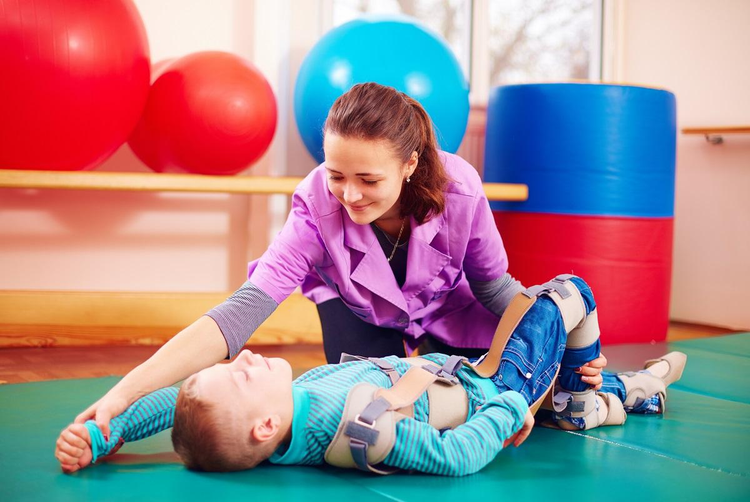
Specialized neuro-rehabilitation and physical therapies designed to optimize muscle tone, balance, and independent mobility in children.

Cerebral Palsy

What is Cerebral Palsy
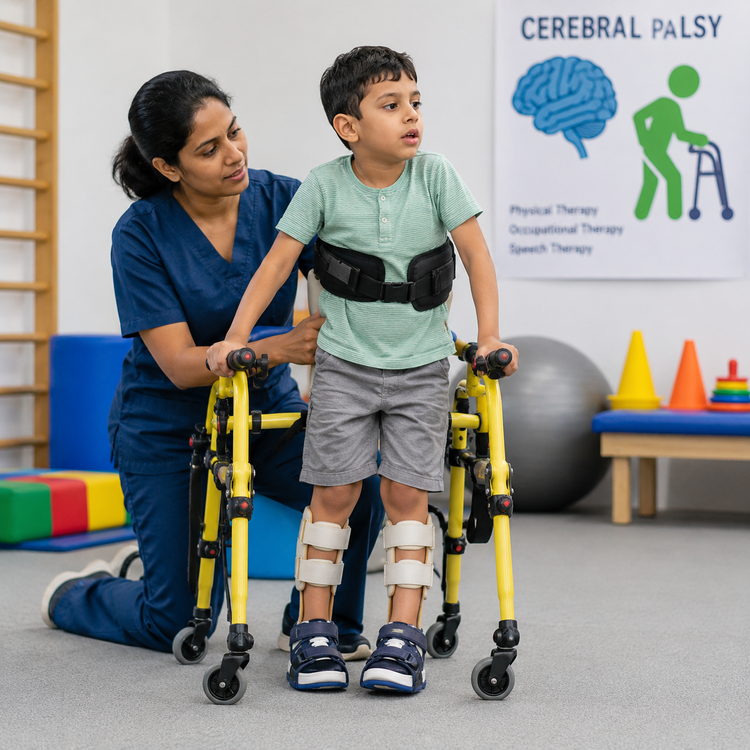
Cerebral Palsy (CP) is a permanent group of movement disorders caused by abnormal development or damage to the parts of the brain that control muscles, balance, and posture. This brain injury typically occurs before birth, during childbirth, or in early infancy while the brain is still developing. Because the underlying damage is in the brain rather than the muscles themselves, the muscles are structurally healthy but receive faulty or uncoordinated signals from the nervous system. The brain injury itself is non-progressive, meaning it will not get worse over time, though a person's physical symptoms and mobility can change as they grow. Symptoms vary widely from person to person, ranging from a mild, barely noticeable stiffness in one hand to a severe lack of motor control that requires a wheelchair and lifelong care. While there is currently no cure for the brain injury, a combination of physical therapy, specialized medications, assistive devices, and early intervention can significantly improve muscle function, independence, and overall quality of life.
Comprehensive therapeutic support aimed at strengthening posture, coordination, and a child’s ability to perform daily tasks.

The Four Main Types of Cerebral Palsy
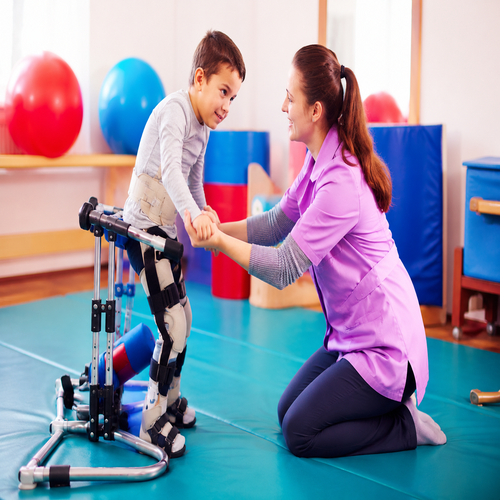
Transforming physical and movement challenges into steady, measurable milestones for your child at

The exact symptoms vary wildly from person to person depending on which specific part of the brain was affected. Doctors typically classify CP into four main types based on the primary movement problem involved:

Spastic Cerebral Palsy: This is the most common type (affecting about 80% of people with CP). It causes increased muscle tone, meaning the muscles are stiff and tight, making movements awkward or difficult.

Dyskinetic Cerebral Palsy: People with this type have trouble controlling the movement of their hands, arms, feet, and legs. Their movements are involuntary and can fluctuate between being slow and writhing or rapid and jerky.

Ataxic Cerebral Palsy: This type primarily affects balance and depth perception. People with ataxic CP might look unsteady when they walk and struggle with precise coordination, like reaching for an object or writing.

Mixed Cerebral Palsy: Some individuals show symptoms of more than one type of CP. The most common combination is spastic-dyskinetic CP.

Common Symptoms of Cerebral Palsy
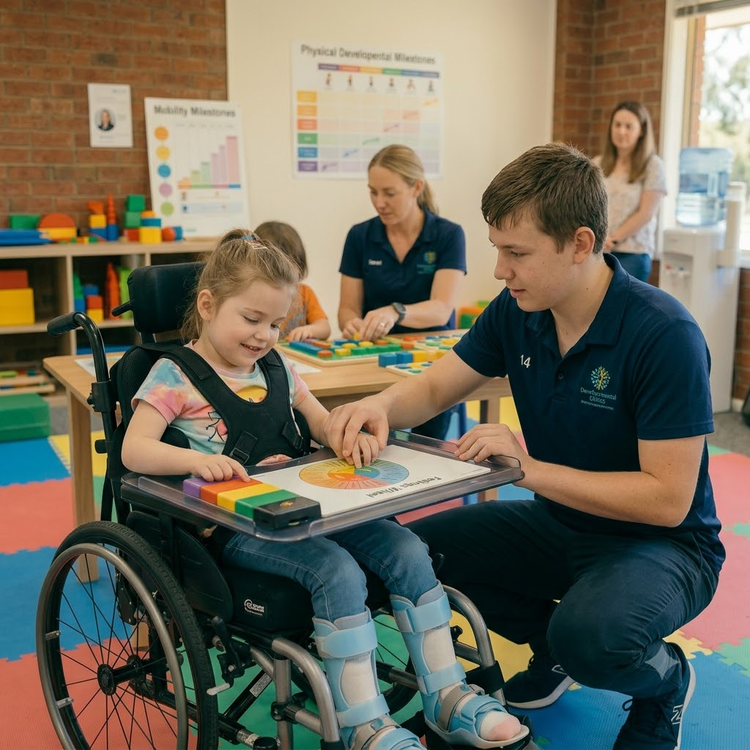
Specialized physical therapies to reduce muscle tightness, ease movement difficulties, and maximize joint flexibility and range of motion.

Muscle stiffness (spasticity)

Many individuals experience tight, stiff muscles that make movement difficult and can limit flexibility and range of motion.

Targeted balance and motor training to improve walking, precise reaching, grasping objects, and steady body coordination.

Poor muscle coordination

Children and adults with cerebral palsy may have difficulty performing precise movements, leading to challenges with walking, reaching, grasping objects, or maintaining balance.

Proactive, milestone-focused interventions to accelerate essential physical skills like sitting, crawling, standing, and independent walking.

Delayed motor development

Milestones such as rolling over, sitting, crawling, standing, or walking may be achieved later than expected.

Specialized neuro-rehabilitation to correct unusual body alignments, manage involuntary movements, and encourage balanced, symmetrical limb use.

Abnormal posture and movement patterns

Individuals may display unusual body positions, involuntary movements, or asymmetrical use of the arms and legs.
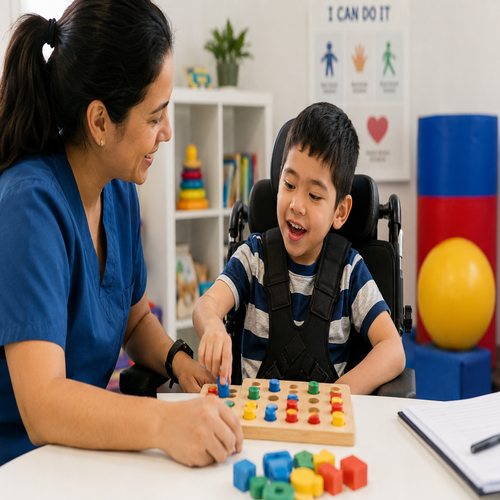
Core strengthening exercises and endurance building to enhance functional mobility and promote independent daily activities.

Muscle weakness

Reduced muscle strength can affect mobility, endurance, and the ability to perform daily activities independently.
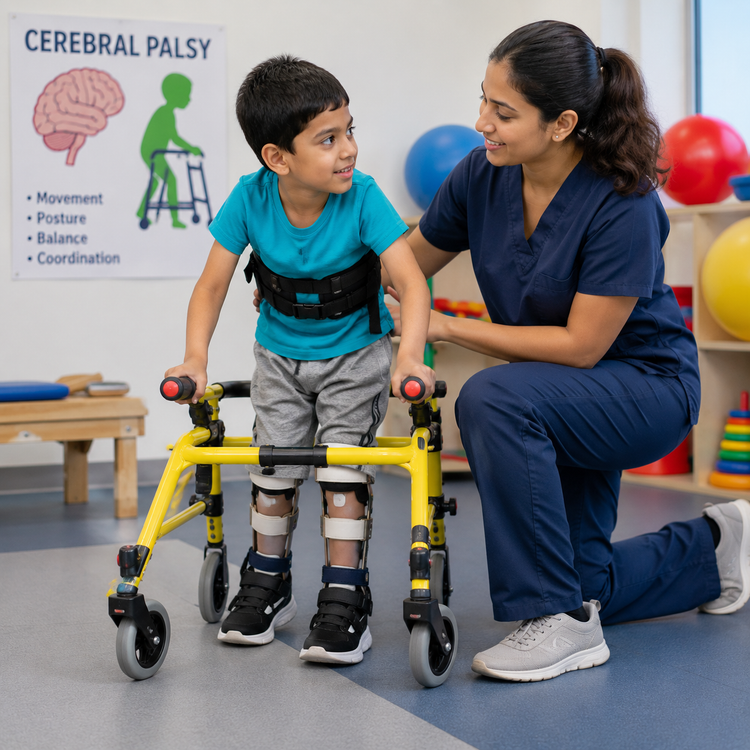
Targeted motor control therapies designed to minimize uncontrolled, jerky, or twisting movements during intentional physical actions.

Involuntary movements

Some individuals experience uncontrolled twisting, writhing, or jerky movements, particularly when attempting voluntary actions.

Common Signs and Management

Cerebral palsy affects control over muscles, it can impact functions beyond just walking, including feeding, swallowing, and speaking. Some individuals may also experience related conditions like seizures, vision or hearing issues, or learning differences, while others have completely typical intellectual abilities.

While there is no cure for the underlying brain injury, various interventions can significantly improve mobility, independence, and quality of life:

  • Physical and Occupational Therapy: To improve strength, flexibility, and daily living skills.
  • Speech Therapy: To help with communication and swallowing difficulties.
  • Assistive Devices: Such as braces, walkers, wheelchairs, or communication devices.
  • Medications & Surgery: To manage muscle stiffness or correct structural bone changes.

Treatment and management of cerebral palsy

The treatment and management of Cerebral Palsy (CP) focuses entirely on maximizing independence, improving mobility, managing pain, and preventing long-term physical complications. Because the underlying brain injury cannot be cured, a multidisciplinary care team collaborates to design a highly individualized plan that evolves as the person grows. The absolute cornerstone of lifelong management is a combination of core rehabilitative therapies, including physical therapy to build core strength and prevent permanent muscle shortening (contractures), occupational therapy to master fine motor tasks like writing and dressing, and speech-language pathology to treat communication barriers and dangerous swallowing difficulties. To control the abnormal nerve signals that cause severe muscle stiffness, medical teams utilize targeted interventions such as oral muscle relaxants, localized Botox injections, or surgically implanted intrathecal baclofen pumps that deliver medication directly into the spinal fluid. When tight muscles begin pulling growing joints out of alignment, orthopedic surgeries are performed to lengthen tendons or realign the hips and spine, while specialized neurosurgeries like Selective Dorsal Rhizotomy (SDR) can permanently reduce leg spasticity by cutting misfiring spinal nerves. These medical efforts are supported daily by specialized assistive technology, ranging from rigid Ankle-Foot Orthoses (AFOs) that stabilize walking gaits to advanced Augmentative and Alternative Communication (AAC) devices that allow non-verbal individuals to speak effortlessly using eye-gaze tracking.

FAQ

What is Cerebral palsy?
Cerebral palsy (CP) is a group of neurological disorders that permanently affect body movement, muscle coordination, and posture. It is caused by abnormal development or damage to the brain before, during, or shortly after birth.
Is Cerebral Palsy a disease?
No, Cerebral Palsy is not a disease, illness, or contagious condition. It is a neurological disorder or clinical condition resulting from a non-progressive brain injury sustained during early development.
Is Cerebral Palsy hereditary or passed down through families?
In the vast majority of cases, CP is not hereditary. It is usually caused by random events like prenatal infections, fetal strokes, or premature birth complications. However, rare genetic mutations that increase the risk of prematurity or blood clotting disorders can occasionally play an indirect role.
Is there a cure for Cerebral Palsy?
There is currently no cure for the underlying brain injury that causes CP. However, a wide range of therapies, medications, assistive technologies, and surgeries can drastically improve mobility, independence, and overall quality of life.
What is the most common cause of Cerebral Palsy?
The most common cause is abnormal brain development or damage to the brain’s white matter before birth (congenital CP). The single largest risk factor is premature birth and low birth weight, as a premature baby's blood vessels in the brain are incredibly fragile.
Does a lack of oxygen during birth cause all cases of CP?
No. This is a common historical misconception. Modern medical research indicates that a lack of oxygen during a difficult delivery (birth asphyxia) accounts for less than 10% of all Cerebral Palsy cases.
What are maternal risk factors during pregnancy?
Major prenatal risk factors include maternal intrauterine infections (like chorioamnionitis or cytomegalovirus), carrying multiples (twins or triplets), severe untreated preeclampsia, and exposure to specific toxins.
Can a child develop Cerebral Palsy after they are born?
Yes. This is known as Acquired CP and accounts for about 10% to 15% of cases. It happens if a baby or toddler suffers a brain injury before the age of 5—most commonly due to bacterial meningitis, severe head trauma from an accident, or oxygen deprivation from a near-drowning incident.
Can Cerebral Palsy be prevented?
While many cases cannot be prevented, certain risks can be lowered. Pregnant mothers can reduce risks by staying up to date on vaccinations (like Rubella), treating maternal infections immediately, and receiving proper prenatal care. For newborns, treating severe jaundice quickly with phototherapy prevents brain damage known as kernicterus.
Does Cerebral Palsy get worse as a person grows older?
The underlying injury to the brain is non-progressive, meaning the brain damage itself will never worsen or spread. However, the physical symptoms can change, and the physical toll on joints and muscles can cause increased pain or mobility changes as a person ages.
Does Cerebral Palsy affect a person’s intelligence?
Not necessarily. CP is primarily a physical motor disability. Approximately 50% of people with CP have completely typical or highly advanced intellectual capabilities. The other half may experience varying degrees of co-occurring intellectual or learning disabilities due to the extent of the brain injury.
What are the earliest signs of CP in a baby?
Early signs include developmental delays (e.g., not holding up their head by 4 months or sitting by 9 months), feeling unusually stiff or unusually "floppy" like a rag doll, crossing or "scissoring" their legs when picked up, or favoring one side of the body entirely.
How is Cerebral Palsy diagnosed?
CP is diagnosed through a combination of clinical observations and diagnostic tests. Doctors track developmental milestones, evaluate muscle tone and reflexes, and use brain imaging tools—primarily an MRI (Magnetic Resonance Imaging)—to pinpoint areas of brain damage.
At what age is Cerebral Palsy usually diagnosed?
While severe cases can be identified in the first few months of life, a formal diagnosis is typically made between 12 and 24 months of age as the child’s motor systems mature and developmental delays become more obvious.
Can an MRI miss Cerebral Palsy?
Occasionally, a person may show clear physical symptoms of CP, but their MRI scans look typical. In these rare instances, a clinical diagnosis is still made based entirely on physical examinations, reflexes, and movement history.
What specialists make up a CP care team?
A comprehensive care team usually includes a pediatrician, a pediatric neurologist, a developmental physiatrist (rehabilitation doctor), an orthopedic surgeon, physical therapists, occupational therapists, and speech-language pathologists.
What is the purpose of physical and occupational therapy for CP?
Physical therapy focuses on building core muscle strength, improving balance, and stretching tight muscles to keep joints flexible. Occupational therapy teaches individuals alternative ways to handle daily tasks like dressing, eating, writing, and using adaptive tech to maximize independence.
Why do people with CP take muscle relaxants?
Medications like oral Baclofen or Diazepam help lessen severe muscle stiffness and spasms. By relaxing the muscles globally, these medications reduce pain and make physical therapy sessions far more effective.
How does Botox help treat Cerebral Palsy?
When injected directly into a targeted, overactive muscle (like the calf), Botox temporarily blocks the nerve signals causing it to spasm. This relaxes that specific muscle for 3 to 6 months, allowing the person to stretch effectively or walk with their feet flat on the ground.
Can people with Cerebral Palsy live independently as adults?
Yes, many adults with CP live completely independent lives, pursue careers, marry, and have families. Independence levels vary based on the physical severity of the condition and access to assistive technology, community support, and workplace accommodations.