DOWN SYNDROME
Core Facts About Down Syndrome
It is not an illness: Down syndrome is a lifelong genetic variation, not a disease or something that can be "caught" or cured.
Developmental Effects: The extra genetic material alters the course of development. It commonly causes mild-to-moderate intellectual disability, characteristic physical features, and distinct developmental milestones.
Common Physical Traits: While everyone with Down syndrome looks unique and takes after their family, common traits can include almond-shaped eyes, a flattened nasal bridge, a single deep crease across the palm of the hand, and lower muscle tone (hypotonia).
Associated Health Conditions: Individuals have a higher likelihood of certain medical conditions, such as congenital heart defects, hearing loss, vision problems, and thyroid issues. Regular medical care helps manage these effectively.
What is Down Syndrome?
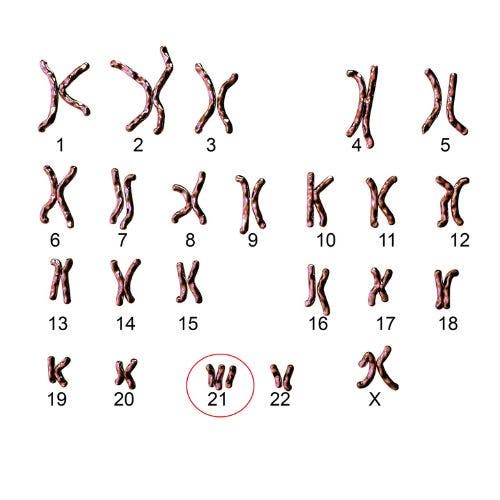
Down syndrome (often called Trisomy 21) is a genetic condition where a person is born with an extra chromosome. Humans typically have 46 chromosomes; individuals with Down syndrome have 47, specifically an extra full or partial copy of chromosome 21. This alters typical physical and cognitive development.
Key Things to Know :
It is not an illness: Down syndrome is a lifelong genetic characteristic, not a disease or something that can be "caught" or "cured."
Unique individuals: While there are common physical traits—such as almond-shaped eyes, a flattened nasal bridge, lower muscle tone, and a single deep crease across the palm—people with Down syndrome look like their own families and have unique personalities and talents.
Development and Learning: It typically causes mild-to-moderate intellectual and developmental delays. However, everyone learns and develops at their own pace.
Health: Individuals have a higher likelihood of certain medical conditions, such as congenital heart defects, thyroid issues, or vision and hearing challenges. Modern healthcare manages these effectively, and the average life expectancy is now around 60 years.
Most common physical and developmental characteristics associated with Down syndrome

Hypotonia (Low Muscle Tone)
A condition where muscles have a decreased amount of tension or resistance to movement, making them feel soft or limp.

Cognitive Delay (Intellectual Disability)
A limitation in mental functioning and skills, such as communicating, learning, and problem-solving, which causes a person to learn more slowly than typically developing peers.

Epicanthic Folds
A skin fold of the upper eyelid that covers the inner corner (medial canthus) of the eye.

Single Palmar Crease (Simian Crease)
A single, unbroken crease that extends straight across the palm of the hand, rather than the typical two or three intersecting creases.
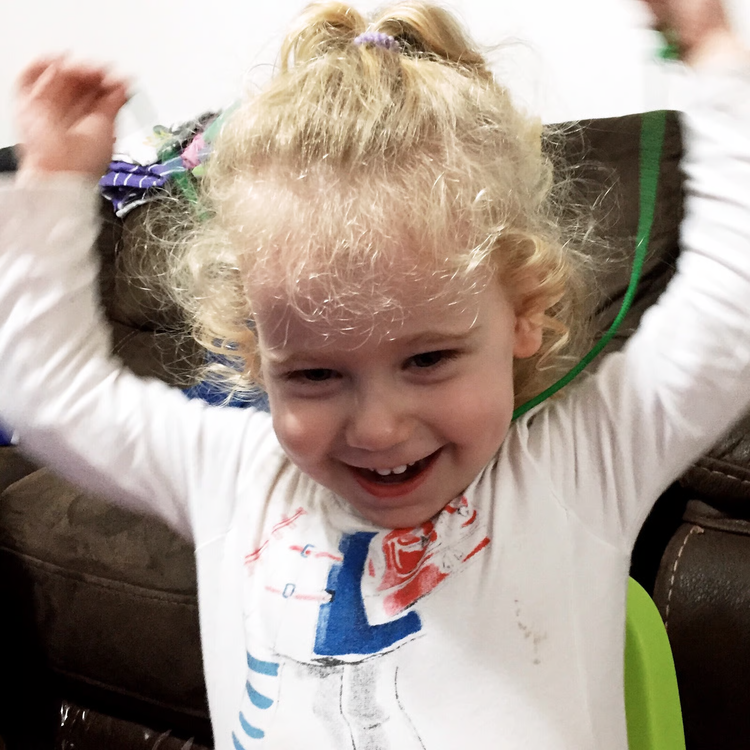
Brachycephaly (Flattened Facial Profile)
A slight flattening of the bones at the back of the head and the central facial structures, particularly the nasal bridge.
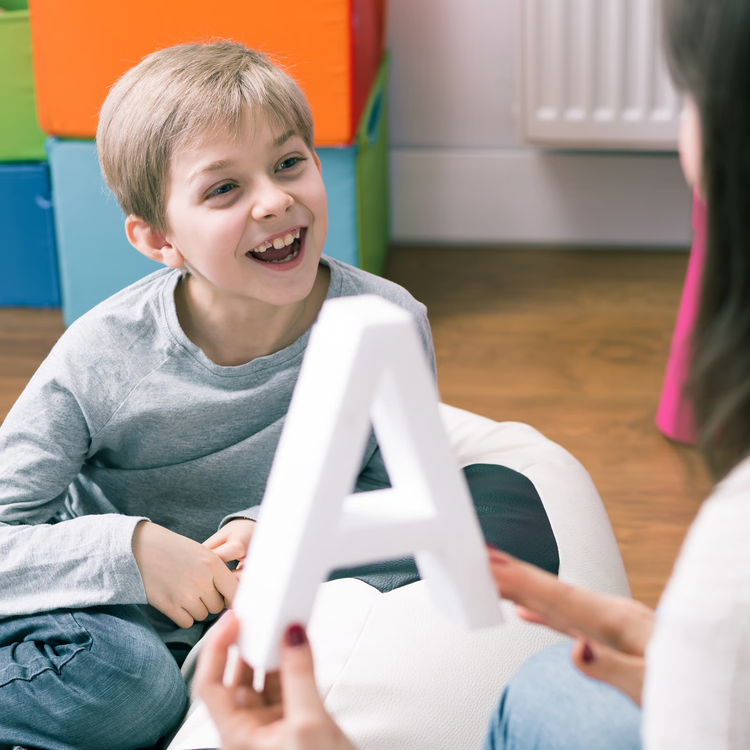
Speech and Language Delays
A delay in the development of the mechanics of speaking (speech) or the understanding and expression of words (language).
Causes
The condition is not a disease and isn't caused by anything a parent did or didn't do. It occurs by random chance during cell division. There are three main types:
Trisomy 21: The most common form (about 95% of cases), where every cell has an extra copy of chromosome 21.
Translocation: Accounts for about 4% of cases. An extra part or whole chromosome 21 is present, but it is attached (translocated) to a different chromosome rather than sitting on its own.
Mosaic:Accounts for about 1% of cases. Only some cells have an extra chromosome 21, while others have the typical 46. Individuals may have fewer symptoms.
What specific speech and language therapy techniques are used for children with Down syndrome?
1. Augmentative and Alternative Communication (AAC)
Because children with Down syndrome understand words long before their mouth muscles can physically form them, therapists introduce AAC early to prevent communication frustration.
Total Communication (Sign Language): Using signs (like American Sign Language or Makaton) alongside spoken words. Research shows that signing actually accelerates speech development because it gives the child a way to communicate immediately, reducing tantrums and boosting confidence while the vocal tract catches up.
Picture Exchange Communication System (PECS): The child learns to hand a picture card of an object (e.g., a cup or a favorite toy) to a caregiver to make a request.
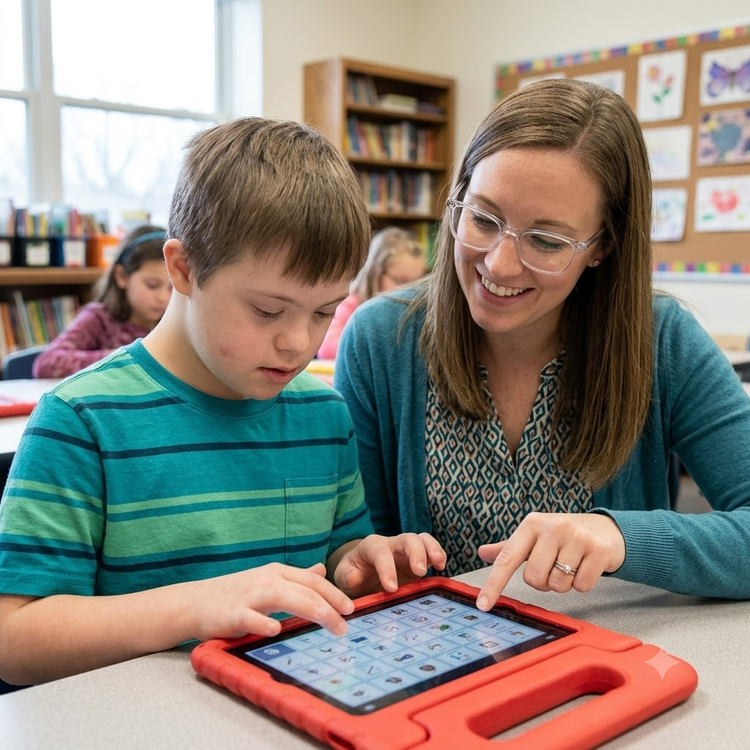
Speech-Generating Devices: Utilizing tablets or dedicated communication buttons where pressing an icon speaks the word aloud.
2. Oral-Motor and Feeding Therapy
Before working on specific words, therapists must strengthen the physical mechanics of speech—the lips, tongue, jaw, and soft palate.
Muscle Toning Exercises: Using specialized tools like speech straws, whistles, or horn kits to build lip closure, jaw stability, and breath control.
Tactile Prompting: Therapists use gentle physical touches on the child's cheeks or lips to show them exactly where their mouth needs to move to make specific sounds (e.g., closing lips tightly to make the "p" or "b" sound).
Guided Feeding Therapy: Because speech and swallowing use the exact same muscles, teaching a toddler how to chew solid foods or sip from an open cup directly strengthens their speech muscles.
3. Visual and Multi-Sensory Supports
Children with Down syndrome are exceptionally strong visual learners. If they only hear a word, it is harder for their brain to process and retain than if they see it.
Visual Schedules and Prompt Cards: Using physical picture strips to outline steps of a routine.
Early Sight-Word Reading: Interestingly, many children with Down syndrome can learn to read whole words visually before they can fully speak them. Therapists use flashcards pairing a clear picture with the written word to anchor the vocabulary in the child's mind.
Pacing Boards: To help with speech clarity, children use a board with dots or blocks. They tap one dot for every syllable or word they say, which naturally slows down their speech rate and improves how clearly they are understood by others.
Recognized By Major Gulf & Indian News Platforms







What Parents Say

Abey Varghese
It is a team approach. Which benefitted the child a lot. Many changes were observed in the child. Activities were also provided for the child to do at home. Really good and thrust worthy institution.

Mini Thomas
Our journey with jewel so far has been very good.Our son has shown good changes with 3 months therapy and we are planning to stay on more .We really appreciate the hard work put by therapists in understanding the child's needs and implementing a goal oriented approach.We high recommend this institute to everyone.

Rihan Jojo
My name is Anu from Palakkad. I brought my 4½-year-old son to Jewel with no speech or eye contact. Within one month, I saw great improvement—he started speaking, sitting better, and even writing letters. I’m very thankful to the caring therapists at Jewel.

Noah Rudra Rahul
Jewel Autism Center has been a wonderful choice for us. We’ve seen great progress in our son. The therapists are professional, caring, and involve parents in goal setting. My son enjoys the sessions, has a strong bond with the therapists, and the center feels like a second home.

Chimi pema Dakpa
Jewel Autism and Child Development Center is an excellent place with highly trained and dedicated therapists. The transparency of allowing parents to observe sessions is truly valuable. My son has shown remarkable progress in a short time, and I’ve also learned a lot as a mother. I’m very grateful to the entire Jewel team for their care and support.

Parvana
I’m grateful to the entire Jewel Autism Development Centre team for their dedication. When we joined, my daughter had poor eye contact, no response to her name, and attention difficulties. After a year of therapy, she has made remarkable progress. Special thanks to all the therapists and staff for their support.

Lionel
Jewel Autism and Development Center has been a great support for our child. In just five months, we’ve seen remarkable progress in communication, participation, and learning. We sincerely thank the management, therapists, and staff and highly recommend Jewel to other families.

Shiva Nadhu
We have been attending this therapy centre for the past six months and are very satisfied. The OT, SE, and Speech sections are excellent, with clear monthly goals and progress reviews. The therapists are professional, caring, and give personal attention, while the social work team is very supportive. We are seeing steady improvement and appreciate the team’s dedicated efforts.
FAQ
Related reading
Articles from our clinical team on this topic: