
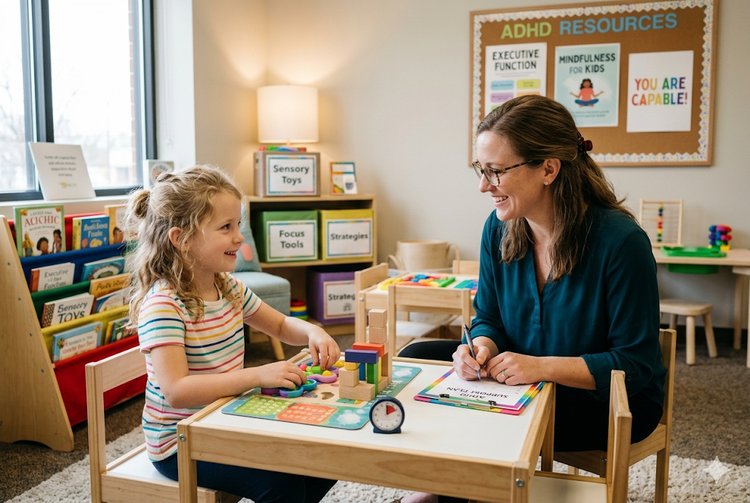
Attention Deficit Hyperactivity Disorder
Attention-Deficit Hyperactivity Disorder (ADHD): Empowering Positive Change in Children
Attention-Deficit/Hyperactivity Disorder (ADHD) Support and Therapy is a scientific, evidence-based approach designed to understand and improve behaviors that are meaningful to children and their families. This targeted support focuses on developing positive and adaptive skills such as sustained attention, impulse control, emotional self-regulation, and executive functioning while reducing behaviors like hyperactivity and distractibility that interfere with everyday functioning and growth.
This therapeutic approach helps children build independence, confidence, and life skills through structured, goal-oriented sessions. Each intervention is personalized to the child’s unique strengths, cognitive challenges, and environment, ensuring consistent progress both at home and in school settings.
While these structured behavioral strategies are essential for children diagnosed with Attention-Deficit/Hyperactivity Disorder (ADHD), they are also especially beneficial for those navigating Autism Spectrum Disorder (ASD) and other developmental or behavioral challenges.
At our center, we believe every child has the potential to thrive. Our certified professionals use evidence-based strategies and compassionate care to promote long-term positive outcomes, empowering children and supporting families every step of the way. Our collaborative approach ensures that progress is meaningful and sustainable, seamlessly integrating therapeutic habits into daily routines. We are committed to nurturing growth, confidence, and independence in every child.

What is ADHD?

Attention-Deficit/Hyperactivity Disorder (ADHD) is a neurodevelopmental condition that influences how the brain processes information, manages energy levels, and regulates attention. Rather than being a simple matter of "not listening" or "having too much energy," ADHD is fundamentally tied to the brain's executive functions—the mental management system that helps us plan, focus, remember instructions, and juggle multiple tasks successfully.
ADHD helps assess:
Working Memory and Organization: The capacity to track multi-step instructions, keep physical spaces organized, and avoid losing essential items like keys, schoolwork, or tools.
Impulse Control and Behavioral Regulation: The ability to pause before reacting, resist immediate distractions, wait for a turn in conversation, and manage sudden changes in a set routine.
Sustained Focus vs. Hyperfocus: How well an individual manages attention during repetitive or non-preferred tasks, alongside their tendency to lock into high-interest activities so deeply that they lose track of time.
Time Awareness and Planning: The ability to estimate how long tasks will actually take, prioritize an incoming workload, and meet deadlines without relying on last-minute panic.
Motor and Vocal Activity Levels: Assessing internal or external restlessness, such as constant fidgeting, a feeling of being "driven by a motor," or talking excessively during quiet periods.
Conditions Supported Through ADHD

Learning difficulties
Many children and adults with ADHD struggle with reading, writing, or math, requiring educational interventions.

Anxiety disorders
Restlessness and worry often coexist with ADHD, and services provide counseling or CBT.

Depression
Emotional regulation issues and frustration with ADHD symptoms can lead to depressive episodes.

Behavioral challenges
Oppositional defiant disorder (ODD) or conduct disorder may be addressed alongside ADHD.

Executive function deficits
Services often include coaching, organizational skills training, and time management strategies.

Social skills difficulties
ADHD services often include social skills training, group therapy, or structured peer interaction programs to strengthen communication and cooperation.
Signs Your Child May Need ADHD Training
Children may benefit from ADHD training (often called behavioral therapy or parent-training) if they consistently show persistent inattention, hyperactivity, or impulsivity that disrupts their school and home life. Signs include chronic forgetfulness, inability to stay seated, interrupting others, and difficulty completing multi-step tasks. Daily self-care and routines
1. Inattention and Focus Issues
- Frequently losing or misplacing essential items (e.g., shoes, homework, toys).
- Daydreaming or appearing as if they aren't listening when spoken to directly.
- Struggling to follow through on instructions or complete homework without constant redirection.
- Avoiding tasks that require sustained mental effort (like reading or long projects).
2. Hyperactivity
- Constantly fidgeting, squirming, or tapping hands and feet while seated.
- Trouble engaging in leisure activities quietly.
- A feeling of being constantly "on the go" or having excess energy that is hard to contain.
- Talking excessively or making excessive noise compared to peers.
3. Impulsivity
- Blurting out answers in class before the question is fully finished or finishing other people's sentences.
- Difficulty waiting their turn in games or lines.
- Interrupting conversations, games, or other children's activities.
Why Choose Our ADHD Program
Our multidisciplinary ADHD training and therapy programs, including behavior modification, occupational therapy, and social skills training, tailored to help individuals with attention and emotional regulation.
ADHD training and management programs.
Multidisciplinary Support: They offer tailored combinations of behavioral, occupational, and speech therapies to address specific ADHD-related challenges like executive dysfunction, sensory processing, and emotional regulation.
Parent Empowerment: Caretakers are actively trained and encouraged to participate in sessions, ensuring therapy techniques can be consistently practiced and reinforced at home.
Data-Driven Transparency: They utilize regular reassessments, transparent goal-tracking, and a digitized reporting system to measure and monitor a child’s progress.
Real-World Training: They focus on real-life application through outdoor and group therapy sessions, helping children practice social skills and regulation in everyday settings like parks and public transport.
Our goal is to create a supportive ecosystem where children not only improve their behavioral and social skills but also gain confidence, resilience, and the ability to thrive in all areas of life.
Related reading
Articles from our clinical team on this topic:
Recognized By Major Gulf & Indian News Platforms







What Parents Say

Shiva Nadhu
We have been attending this therapy centre for the past six months and are very satisfied. The OT, SE, and Speech sections are excellent, with clear monthly goals and progress reviews. The therapists are professional, caring, and give personal attention, while the social work team is very supportive. We are seeing steady improvement and appreciate the team’s dedicated efforts.

Jake Nikhil
Jewel in Kottayam is a world-class facility with over two decades of experience in childhood development. Skilled therapists, efficient staff, and excellent management make it highly recommended for children needing developmental support. Families from across the world trust their international-standard care!

Anu Peter
"I've been taking my child to Jewel Child Development Center in Kakkanad for therapy, and the experience has been truly heartening. Finding the right support for your child can be overwhelming, but the team here makes the journey so much easier. The therapists are not only highly skilled but also genuinely bond with the kids, making the sessions feel more like guided play than clinical work. I've seen a visible shift in my child's confidence and skills since we started. They are also very transparent with progress reports, which helps us stay on track as parents. For anyone in the Kochi area looking for a supportive and professional environment for their child's growth, Jewel is definitely a place you can trust."

Adithya Baiju
Working at Jewel Autism Centre has been a truly rewarding experience. The centre provides a supportive and professional environment where both staff and children are valued with care and respect. The management is approachable, teamwork is encouraged, and there are great opportunities to learn and grow professionally.

Rena Rafic
Working at Jewel Autism Centre and Child Developmental Centre has been a meaningful experience. The center maintains a positive and supportive work environment where the focus is always on the growth and well-being of each child. The team is dedicated, compassionate, and professional, and there is good cooperation among staff members. It is a great place to learn, grow, and contribute to making a difference in children's lives.

Sussamma Mathew
Best child development center with excellent professionals.

Absheen Mathew
Such a Supportive Team.

Shiba Shiny Babu
Jewel Autism Centre, Kottayam, is undoubtedly one of the best autism treatment and support centres in India. The dedication and professionalism of the entire team are truly commendable. The staff provide excellent support and maintain clear, consistent communication with families, ensuring that parents are always informed and involved in their child's progress.
The therapists are highly trained, extremely patient, and genuinely caring in their approach. Their expertise and commitment create a positive and supportive environment for children to learn and grow.
FAQ
Inattentive Type: Characterized by difficulties with focus, organization, following instructions, and forgetfulness (formerly called ADD).
Hyperactive-Impulsive Type: Characterized by physical restlessness, constant fidgeting, talking excessively, and impulsive decision-making.
Combined Type: Displays significant symptoms of both inattention and hyperactivity/impulsivity.
Yes, many people successfully manage their symptoms or supplement their medication using non-pharmacological strategies. These include:
Cognitive Behavioral Therapy (CBT) tailored for ADHD.
Working with an ADHD coach to build organizational systems.
Using external tools like planners, alarms, and visual timers.
Prioritizing regular exercise, consistent sleep, and a protein-rich diet.