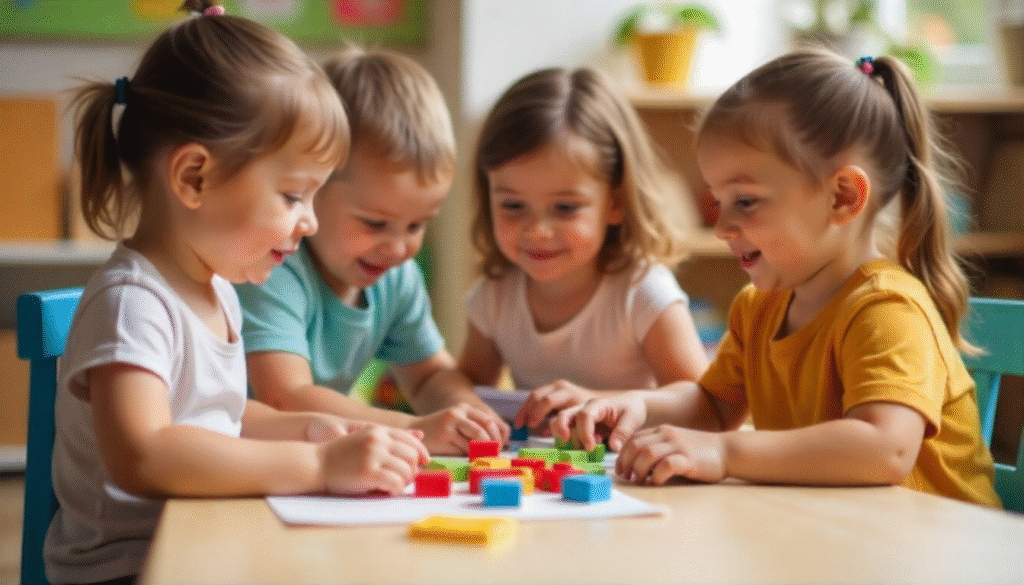
Children with autism often experience challenges in social interaction, emotional understanding, and communication. These areas, known collectively as socio-emotional skills, play a vital role in forming relationships, expressing emotions, and responding to others. One emerging and highly effective approach to nurture these skills is group-based sensory play—an engaging, child-centered method that uses sensory experiences to promote connection, communication, and confidence.
Understanding Sensory Play
Sensory play involves activities that stimulate one or more of the senses—touch, sight, sound, smell, movement, and balance. Examples include playing with sand, water, slime, textured toys, or movement-based activities like swinging and jumping. For autistic children, who often process sensory input differently, these activities provide structured yet flexible opportunities to explore sensations in a safe and therapeutic way.
When this sensory play is conducted in a group setting, the impact expands beyond sensory regulation—it becomes a foundation for social learning. Group-based sensory play creates shared experiences where children can naturally practice social behaviors like turn-taking, imitation, and cooperation.
Why Group-Based Sensory Play Matters
Autistic children may struggle with social cues, peer interaction, or emotional expression. Traditional talk-based social skills training may not always suit their learning styles. Sensory play, on the other hand, provides a non-verbal and experiential medium that bridges these gaps.
During sensory play sessions, children engage together in hands-on activities that capture their attention and reduce anxiety. The shared focus on a sensory task lowers social pressure and allows interaction to happen spontaneously. For example, two children playing with a water table may begin by splashing independently, but over time, they start sharing tools, observing each other’s reactions, and even laughing together—forming the foundation of joint attention and shared joy.
Socio-Emotional Skills Through Sensory Play
1.Enhancing Emotional Regulation
Many autistic children experience sensory sensitivities that can lead to emotional outbursts or withdrawal. Group sensory play allows them to explore sensations in a guided, supportive environment. Calming sensory activities such as deep pressure play (using weighted balls or crash pads) or tactile bins with soft textures help children regulate their emotions. As they learn to manage their sensory needs, they gain better control over their emotional responses.
2.Building Social Interaction
Group sensory play naturally encourages *social reciprocity*. Activities like passing textured objects, bouncing a ball to a peer, or building a sensory obstacle course require cooperation. Through these shared experiences, children practice initiating interactions, waiting for turns, and responding to others—key components of social development.
3.Fostering Empathy and Understanding
When children play together, they observe and respond to each other’s emotions. For instance, if one child reacts excitedly to a new sensory material, another might imitate or share that excitement. Such experiences build early forms of empathy and emotional awareness, even in children who find it difficult to express or recognize feelings verbally.
4.Encouraging Communication
Sensory play motivates children to communicate, even if nonverbally. They may point, gesture, or use single words to request materials or express enjoyment. Therapists and peers can model simple social phrases like “your turn” or “let’s share,” reinforcing communication in meaningful, context-based ways.
The Therapist’s Role
Occupational therapists and educators play a vital role in structuring group sensory sessions. They ensure that the environment is predictable, supportive, and inclusive. By carefully selecting sensory materials and setting up small-group activities, they can promote interaction without overwhelming the child. The therapist acts as a facilitator—observing, guiding, and gently prompting social exchanges when needed.
Conclusion
Group-based sensory play is far more than just fun—it is a powerful developmental tool that integrates sensory regulation with social learning. By engaging in sensory-rich group experiences, autistic children gain opportunities to connect with peers, express themselves, and understand emotions in ways that feel natural and enjoyable.
When play becomes shared, it transforms from a solitary activity into a bridge—linking children to the world around them. Through this bridge, socio-emotional growth blossoms, one sensory moment at a time.