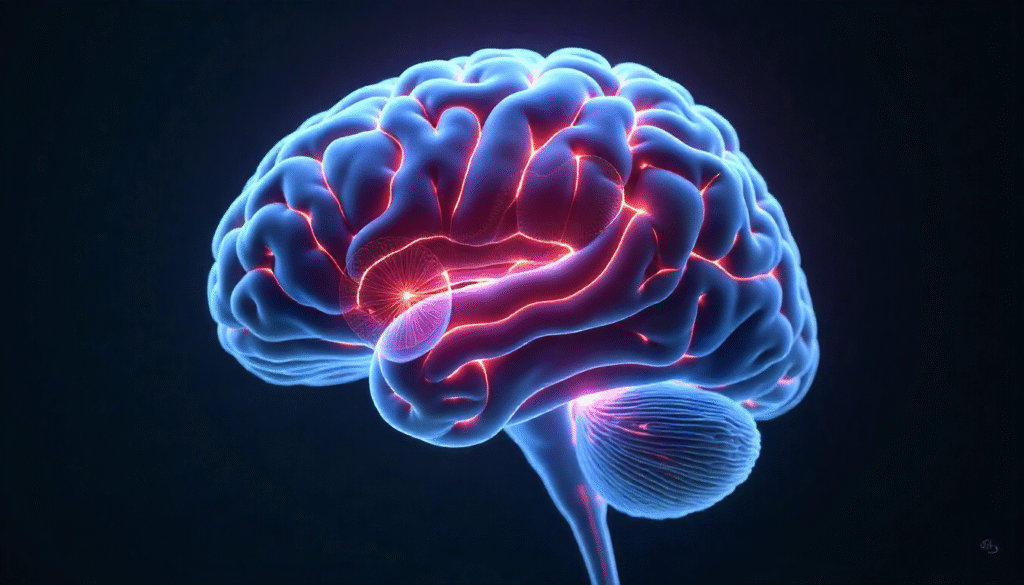
Autism Spectrum Disorder (ASD) is a complex neurodevelopmental condition that affects how individuals perceive the world and interact with others. While its symptoms vary widely—from difficulties in social communication to repetitive behaviors—one thing is clear: ASD has deep roots in brain development and neurological function.
But what exactly happens in the brain of someone with autism? Let’s explore the neurological underpinnings of this spectrum disorder.
Brain Structure and Connectivity
One of the most consistent findings in autism research is differences in brain structure and connectivity.
- Early Brain Overgrowth
Studies have shown that many children with autism experience unusually rapid brain growth during the first few years of life. This overgrowth particularly affects areas like the frontal cortex, which is involved in decision-making, social behavior, and communication. However, this rapid growth often plateaus later, resulting in atypical brain size and connectivity. - Altered Connectivity
ASD is often associated with imbalances in brain connectivity:
Hyperconnectivity in some areas (such as sensory regions), which may explain hypersensitivity to lights, sounds, or textures.
Hypoconnectivity between regions responsible for social processing and executive function, such as between the prefrontal cortex and other parts of the brain. This could underlie challenges in social interaction and flexible thinking.
The Role of Neurotransmitters
Neurotransmitters—chemical messengers in the brain—play a vital role in shaping behavior and mood. In individuals with autism, imbalances in neurotransmitter systems have been observed. - GABA and Glutamate
The balance between excitatory (glutamate) and inhibitory (GABA) neurotransmitters is often disrupted in ASD. Too much excitation or too little inhibition can lead to overactivity in certain brain regions, contributing to sensory overload and anxiety. - Serotonin
Many individuals with autism have elevated levels of serotonin in their blood. While the implications are not fully understood, serotonin is involved in mood regulation, sleep, and social behavior—all areas where autistic individuals may experience difficulties.
Genetics and Brain Development
ASD is highly heritable, with genetic factors contributing significantly to the condition. Hundreds of genes have been associated with autism, many of which are involved in brain development, neuron signaling, and synapse formation.
Some of these genetic variations affect:
Synaptic plasticity, which is crucial for learning and memory.
Axon guidance, determining how neurons connect during development.
Immune system regulation, which can influence brain inflammation and neural function.
While no single gene causes autism, a combination of genetic variations, often interacting with environmental factors, influences brain development in ways that contribute to ASD.
The Social Brain and Theory of Mind
Many of the core features of autism—difficulty reading social cues, understanding others’ emotions, and forming relationships—are linked to what neuroscientists call the “social brain.”
This includes structures such as:
Amygdala: involved in emotional processing.
Superior temporal sulcus: helps interpret facial expressions and gaze.
Medial prefrontal cortex: important for understanding others’ perspectives (Theory of Mind).
Studies suggest that these areas function differently in people with autism, potentially explaining social communication challenges.
Looking Ahead
Autism is not a disease to be “cured,” but a difference in brain wiring that shapes how a person experiences the world. Understanding the neurological basis of autism helps shift the conversation from one of deficit to diversity. It also paves the way for more personalized interventions—whether through behavioral therapies, sensory integration, or even future neurobiological treatments.
As research continues to evolve, so does our appreciation for the complexity and uniqueness of every brain on the spectrum.