
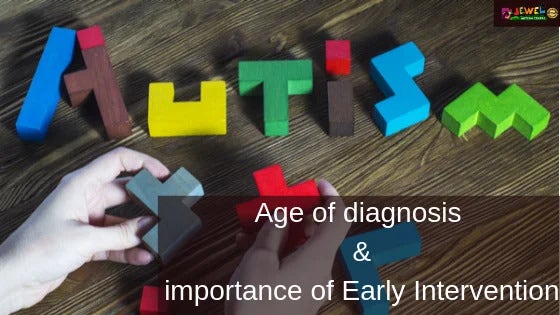
- Autism is a neurodevelopmental disorder that affects communication skills, social interactional skills and behaviors
- When a child is born, nobody sees anything wrong with them, the child seems to grow up typically as peers, but later the child may start showing some signs of autism.
- Recent studies have found that signs and symptoms of autism begin to emerge as early as 6-12 months
- Autism symptoms can continue to emerge or fade away until around 24 months, then only the diagnosis tends to become stable.
- If a child who achieved all his developmental milestones at 18 months; but then begin to lose the learned skills “regression” after 18 months; in such situations, ASD can’t be diagnosed at 18 months.
- Conversely, some children may show early signs and delay, but then catch up with their peers by 24 months if proper language stimulation has provided. In such a situation, we can’t make a stable diagnosis before 24 months.
- However, based on the signs and symptoms, we can identify autism as early by 18 months
- If autism is caught in infancy, therapeutic intervention can take its full advantage of the young brain’s remarkable plasticity
- There are 2 important contributing factors that play a key role in the overall development
- Brain Plasticity
- Critical period
- Neuro/brain plasticity refers to the structural and functional changes in the brain that are brought about by training and experience
- Critical periods are times when experience has a strong impact on brain development
- During the critical period, if we provide proper intervention/stimulation, this can help to change the way the brain develops.
- This plasticity of the brain is maximal during the critical period.
- (If exposure to language was delayed until after 5 years and up to puberty, the development would not benefit from the default mechanism but would be driven by a different set of cognitive processes and ultimately be less successful)
- Recent studies support to start the intervention as early as possible for better outcomes.
- Recognizing the problem early and seeking Early Intervention is a key factor for parents and caretakers
- Early years of life are an important time for active brain development and organization
- Early Intervention is a therapeutic program which focuses on improving the child’s overall development
- It includes Speech Therapy, OT, SE, PT, ABA therapy, parental counseling and parental training.
- In the later intervention, the gap is more and is difficult to intervene than when the gap is less
- With proper early intervention, we can reduce the gap in the development than later intervention as the gap is more.
- With EI, overall development can proceed in typical fashion and the outcome will be better than later intervention
- ASD cannot be diagnosed based on the biomedical test such as MRI, blood test etc
- If you suspect any signs and symptoms of ASD, consult the professional and go ahead with ASD evaluation and start with EI as soon as possible
- Last but not least
- Don’t follow the “Wait and See” approach, most of the parents might think let’s wait for a few months for any changes.
- Frankly speaking- These waiting may lose the valuable time at which the child has the best chance for improvements.