
FEEDING THERAPY
Supporting Healthy Eating in Children with Autism
Feeding challenges are common in children withAutism Spectrum Disorder (ASD). These may include extreme food selectivity, refusal to eat certain textures, colors, or temperatures, limited food variety, difficulties with chewing or swallowing, gagging, or dependence on specific feeding routines. Feeding Therapy is designed to address these challenges and help children develop healthy, safe, and enjoyable eating habits.
Our feeding therapy follows a child-centered, sensory-based approach, addressing both physical and behavioral aspects of feeding. Sessions are personalized to each child’s needs and paced gently in a supportive, stress-free environment to encourage steady progress.
Through structured play and guided food exploration, children are gradually introduced to new tastes, textures, and mealtime routines. Therapy focuses on improving oral motor skills, increasing sensory tolerance, and reducing anxiety around eating. Parents and caregivers are actively guided to support consistent progress at home.
Over time, feeding therapy helps children build confidence around food, improve nutritional intake, and participate more comfortably in family mealtimes, leading to better overall health and quality of life.
Who is it for?
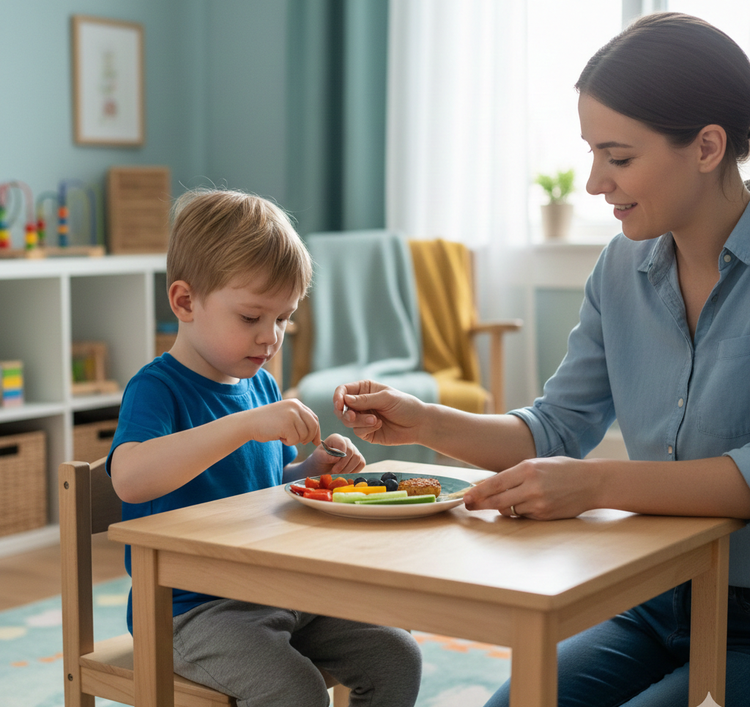
Feeding therapy is typically recommended for individuals experiencing:
Oral-Motor Difficulties: Trouble chewing, moving food around the mouth, or clearing food from the spoons.
Sensory Processing Issues: Extreme aversion to certain textures, smells, colors, or temperatures of food (common in children with Autism Spectrum Disorder or Sensory Processing Disorder).
Swallowing Disorders (Dysphagia): Coughing, choking, or gagging while eating or drinking, which can put them at risk for aspiration (food entering the lungs).
Medical Component Hurdles: Children transitioning from tube feeding (NG or G-tube) to oral eating, or those with severe gastroesophageal reflux (GERD) who associate eating with pain.
Severe Food Selectivity: Consuming an extremely restricted variety of foods (e.g., fewer than 10 to 15 foods total), which impacts growth and development.
The Pillars of Feeding Therapy
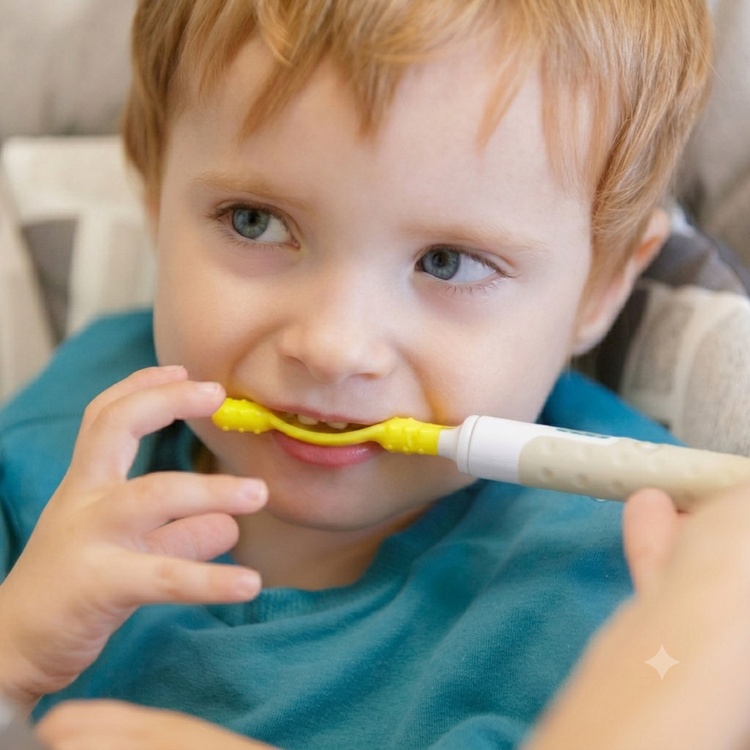
Feeding therapists—typically specialized Speech-Language Pathologists (SLPs) or Occupational Therapists (OTs)—focus on three core areas:
Physiology & Mechanics: Building jaw, lip, and tongue strength and coordination so the individual can safely manage different food consistencies.
Sensory Desensitization: Using structured frameworks (like the SOS—Sequential Oral Sensory approach) to help individuals tolerate new foods incrementally. This involves touching, smelling, and interacting with food before ever asking them to taste or swallow it.
Behavioral & Environmental Strategies: Setting up positive routines, choosing appropriate seating for trunk support, and reducing parental anxiety to change the overall dynamics of mealtime.
Core Focus Areas of Feeding Therapy

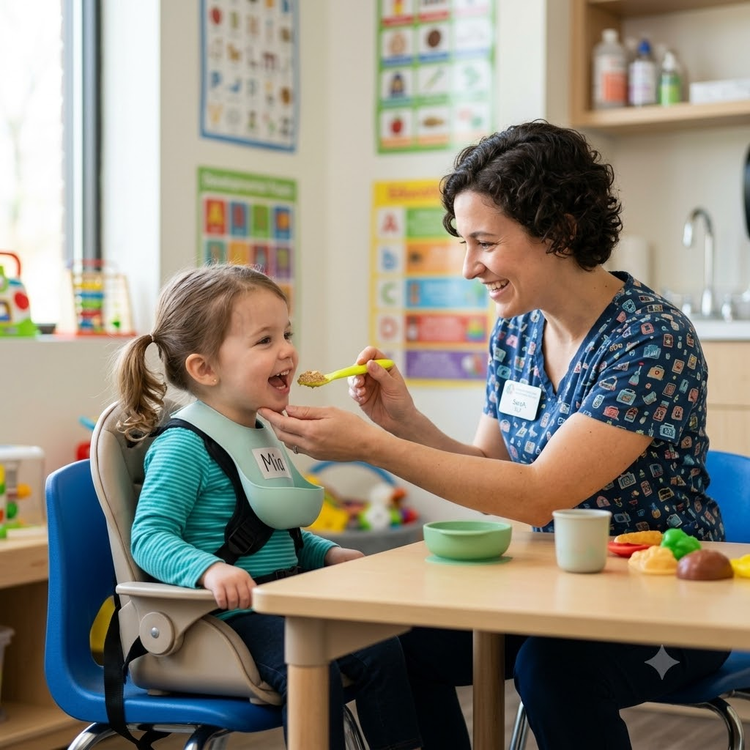
Food Selectivity & Picky Eating
Supports children who prefer limited foods by gradually increasing acceptance of new tastes, textures, and food varieties in a pressure-free manner.

Sensory Sensitivities
Helps children manage sensitivities to food textures, tastes, smells, and temperatures through gentle sensory exposure and regulation strategies.

Chewing & Swallowing Skills
Focuses on strengthening oral motor skills to improve safe chewing, swallowing, and overall feeding efficiency.

Mealtime Behavior & Routines
Encourages positive mealtime behaviors, flexibility, and structured routines to make eating a calmer and more enjoyable experience.
Recognized By Major Gulf & Indian News Platforms







What Parents Say

Jake Nikhil
Jewel in Kottayam is a world-class facility with over two decades of experience in childhood development. Skilled therapists, efficient staff, and excellent management make it highly recommended for children needing developmental support. Families from across the world trust their international-standard care!

Anu Peter
"I've been taking my child to Jewel Child Development Center in Kakkanad for therapy, and the experience has been truly heartening. Finding the right support for your child can be overwhelming, but the team here makes the journey so much easier. The therapists are not only highly skilled but also genuinely bond with the kids, making the sessions feel more like guided play than clinical work. I've seen a visible shift in my child's confidence and skills since we started. They are also very transparent with progress reports, which helps us stay on track as parents. For anyone in the Kochi area looking for a supportive and professional environment for their child's growth, Jewel is definitely a place you can trust."

Adithya Baiju
Working at Jewel Autism Centre has been a truly rewarding experience. The centre provides a supportive and professional environment where both staff and children are valued with care and respect. The management is approachable, teamwork is encouraged, and there are great opportunities to learn and grow professionally.

Rena Rafic
Working at Jewel Autism Centre and Child Developmental Centre has been a meaningful experience. The center maintains a positive and supportive work environment where the focus is always on the growth and well-being of each child. The team is dedicated, compassionate, and professional, and there is good cooperation among staff members. It is a great place to learn, grow, and contribute to making a difference in children's lives.

Sussamma Mathew
Best child development center with excellent professionals.

Absheen Mathew
Such a Supportive Team.

Shiba Shiny Babu
Jewel Autism Centre, Kottayam, is undoubtedly one of the best autism treatment and support centres in India. The dedication and professionalism of the entire team are truly commendable. The staff provide excellent support and maintain clear, consistent communication with families, ensuring that parents are always informed and involved in their child's progress.
The therapists are highly trained, extremely patient, and genuinely caring in their approach. Their expertise and commitment create a positive and supportive environment for children to learn and grow.

Vihaan Kumar
I miss you. Vihaan is doing good in school. Good sitting ,Good eye contact with class teacher ,Good listening, Good group participation writing Thank you forever.
FAQ
Related reading
Articles from our clinical team on this topic:
- Does watching mobile while eating affect a child’s brain development
- Advances in Infant Feeding: Supporting Development, Assessment, and Neurological Care
- Are we unknowingly feeding our children "poison"? a wake-up call for parents
- Feeding Therapy For Babies
- PRE-FEEDING SKILLS
- TALKTOOLS ORAL PLACEMENT THERAPY FOR SPEECH AND FEEDING