
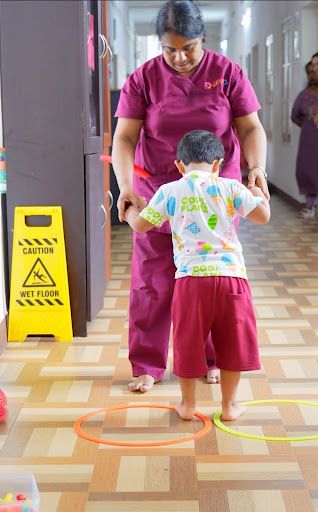
Traditional pediatric therapy has historically focused heavily on improving behaviors, achieving goals, and increasing participation. In many settings, children are expected to:
- Follow instructions immediately
- Sit appropriately
- Complete activities
- Transition quickly
- Participate without resistance
When children struggle to cooperate, adults may naturally become more directive:
“Sit down.”
“Finish the activity.”
“Listen carefully.”
However, modern relationship-based and neurodevelopmental approaches increasingly recognize an important reality:
Children regulate, learn, and participate best when they feel connected before they are expected to comply.
Compliance alone does not necessarily mean learning has occurred.
A child may comply because of:
- Fear
- Pressure
- Avoidance
- Desire for approval
while still feeling:
- Overwhelmed
- Unsafe
- Dysregulated
True therapeutic progress often begins with connection.
Understanding Connection in Therapy
Connection refers to emotional safety between the child and therapist.
Connection involves:
🟢 Trust
🟢 Emotional responsiveness
🟢 Shared attention
🟢 Safety
🟢 Predictability
Children learn through relationships.
Before engaging in tasks, the nervous system often asks:
“Am I safe here?”
Why Compliance Alone Can Become Problematic
When therapy focuses primarily on obedience, children may:
- Suppress emotions
- Hide discomfort
- Mask sensory needs
- Participate out of fear
Children may appear successful externally while experiencing significant internal stress.
Long-term effects may include:
- Reduced self-confidence
- Anxiety
- Avoidance
- Therapy resistance
The Brain, Safety, and Learning
Research involving nervous system regulation suggests learning occurs most effectively when the brain perceives safety.
When children feel unsafe, the nervous system may shift into:
🔴 Fight
🔴 Flight
🔴 Freeze
During these states:
- Problem-solving decreases
- Attention reduces
- Emotional regulation becomes difficult
Connection helps restore safety.
Signs a Child May Need Connection First
Children may:
- Avoid activities
- Refuse participation
- Become emotionally reactive
- Withdraw
- Seek excessive control
- Appear oppositional
Often the question becomes:
Not:
“How do I make this child comply?”
but:
“What is this child communicating?”
Building Connection During Therapy
🟢 Follow the child’s interests
Shared interests create engagement.
🔵 Validate emotions
Examples:
“This feels difficult.”
“I see you’re frustrated.”
🟡 Reduce unnecessary demands
Children regulate better when demands match capacity.
🔴 Become curious rather than corrective
Replace:
“Stop doing that.”
with:
“I wonder what your body needs right now.”
The Role of Occupational Therapy
Occupational therapists support:
- Emotional regulation
- Participation
- Sensory processing
- Functional skills
Therapy becomes more meaningful when interventions occur within safe relationships.
Final Thoughts
Connection and expectations do not compete with each other.
Connection creates the conditions that make meaningful participation possible.
Because children often cooperate best when they first feel understood.