Gestalt Language Processing (GLP) Therapy
Gestalt Language Processing (GLP) Therapy: Guiding Children Toward Flexible, Meaningful Communication
Jewel Autism Centre India provides evidence-based Gestalt Language Processing (GLP) Therapy in India for children with Autism Spectrum Disorder (ASD), speech delay, echolalia, language disorders, and social communication difficulties.
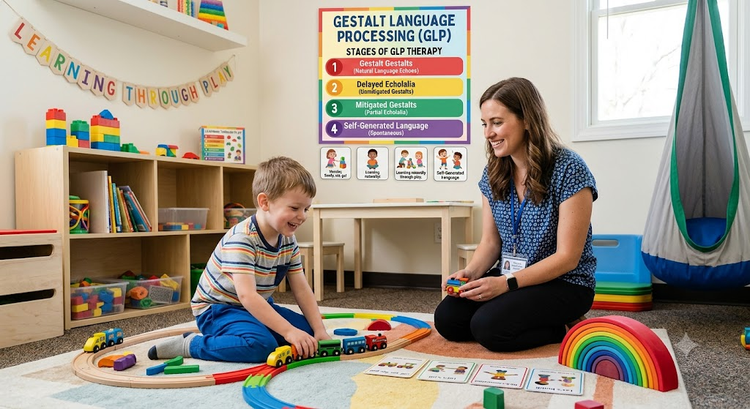
Our structured GLP-informed therapy programs in Kochi and Kottayam focus on recognizing a child's natural language learning style, supporting the journey from scripted or gestalt phrases toward self-generated, flexible language, and building meaningful, functional communication.
We follow an individualized, goal-oriented, multidisciplinary approach to ensure measurable progress and long-term communication outcomes. Therapy sessions are carefully planned to be engaging, functional, and child-centered, using evidence-based Natural Language Acquisition (NLA) principles, play-based learning, visual supports, and interactive activities tailored to each child's unique gestalt language processing profile.
Our therapists work closely with parents and caregivers, providing guidance and strategies to honor and support their child's language journey beyond therapy sessions. This collaborative and holistic approach helps children generalize their communication skills across home, school, and social environments, building confidence, independence, and meaningful connections in everyday life.
What is Gestalt Language Processing (GLP) Therapy?
Gestalt Language Processing Therapy is a specialized clinical approach that supports children who learn language in chunks or "gestalts" — such as whole phrases, scripts, or sentences from songs, shows, or everyday conversations — rather than single words built up one at a time.
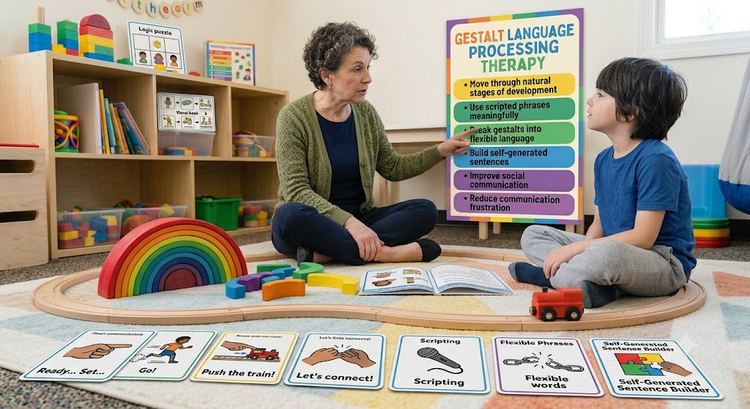
GLP-informed therapy helps children:
Move through the natural stages of language development Understand and use scripted phrases meaningfully Break gestalts into flexible, usable language Build self-generated, original sentences Improve social communication and connection Reduce frustration linked to communication gaps
For children with autism and developmental delays, recognizing and supporting gestalt language processing is a critical part of early intervention. Early, evidence-based GLP therapy helps honor a child's natural communication style while building the foundational skills that support flexible language, learning, and meaningful social interaction.
Gestalt Language Processing Therapy for Autism in India
Many children with autism are gestalt language processors, learning language through memorized phrases, scripts from favorite shows, or intonation patterns rather than single words. This can affect their ability to flexibly express needs, understand others, and participate meaningfully in daily conversations if not supported appropriately. Early, informed GLP therapy plays a vital role in honoring this natural language learning style while guiding children toward more flexible, self-generated communication. At Jewel Autism Centre India, GLP therapy is delivered through an evidence-based, child-centered approach rooted in Natural Language Acquisition (NLA) principles, focusing on practical communication skills and real-life application, helping children communicate more effectively across home, school, and social environments. Therapy programs are individualized after structured assessment and are closely integrated with occupational therapy, ABA therapy, physiotherapy, and parent training to ensure consistency, measurable progress, and meaningful long-term communication outcomes. At Jewel Autism Centre India, GLP therapy focuses on:
- Identifying gestalt language processing stages
- Honoring scripts and echolalia as meaningful communication
- Supporting mitigation of gestalts into smaller, flexible units
- Building self-generated language
- Enhancing joint attention
- Supporting alternative communication methods when needed
- Improving social interaction skills
- Strengthening comprehension and following instructions
Conditions Supported Through GLP Therapy
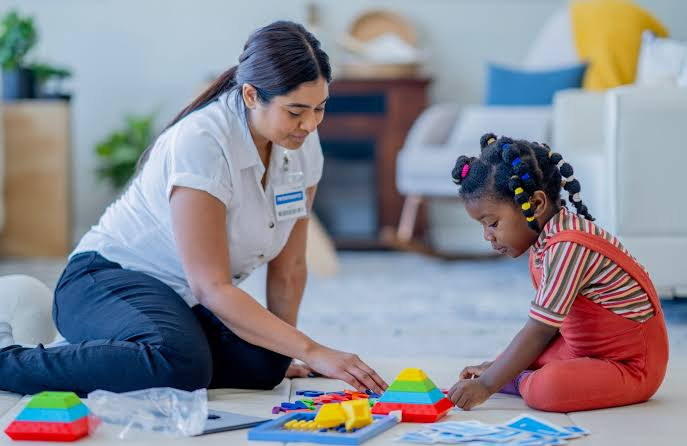
Autism Spectrum Disorder
Helps gestalt language processors with autism move toward flexible, self-generated communication and stronger social connection..

Speech Delay
Supports children who are slow to start talking by recognizing their language learning style and building on it..

Language Delay
Helps children move from scripted phrases to understanding and using flexible, age-appropriate language..
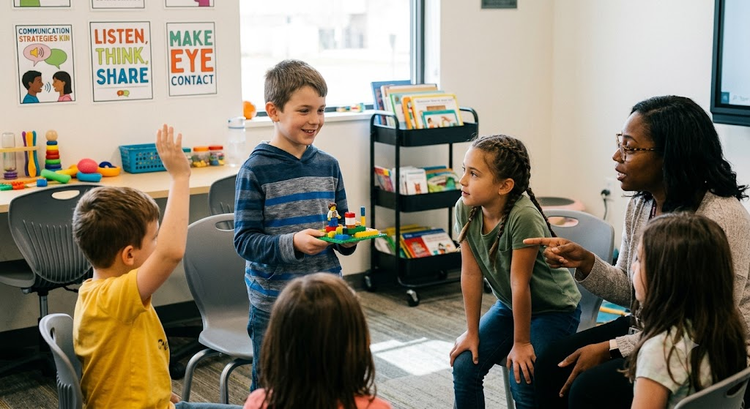
ADHD
Supports children with ADHD by improving communication, listening skills, and social language use.
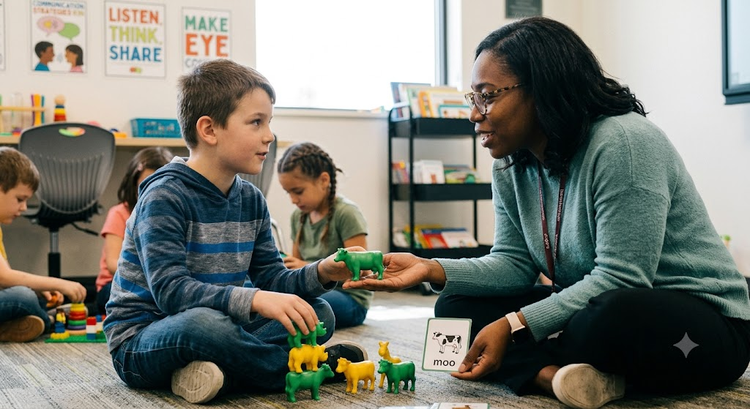
Developmental Delay
Helps address delayed speech and language development by building on the child's natural communication patterns.

Social Communication Disorder
Supports the development of social language skills such as turn-taking, conversation, and understanding social cues.
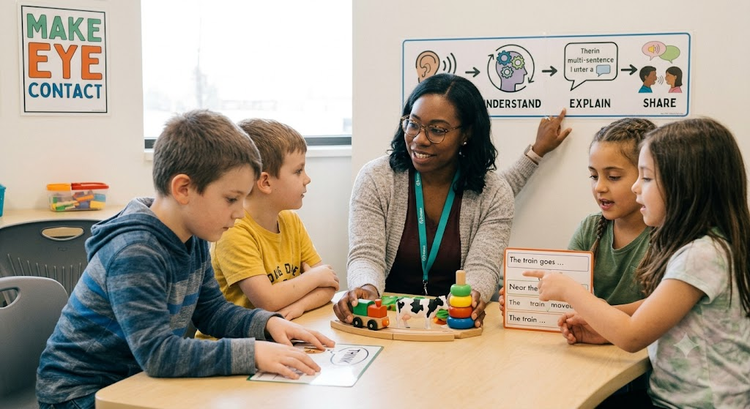
Learning Disabilities
Helps children with learning disabilities improve language processing, comprehension, and expression.
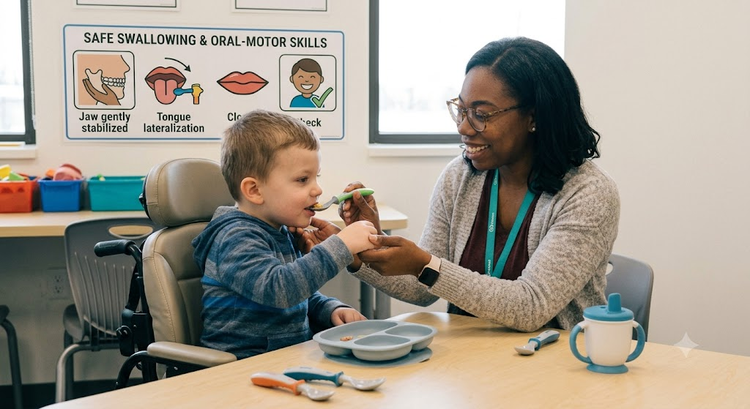
Feeding Difficulties
Helps children improve oral-motor skills, safe swallowing, and positive feeding experiences.
Signs Your Child May Be a Gestalt Language Processor
Recognizing gestalt language processing early can make a significant difference in how a child is supported, especially during critical stages of language development. When these patterns are identified early, informed GLP therapy can help children move toward flexible language while preventing frustration and communication breakdowns. At Jewel Autism Centre India, our evidence-based, child-centered GLP therapy approach focuses on early identification, honoring the child's natural communication style, and active family involvement to support consistent progress across environments. Early, informed support significantly improves long-term language outcomes. Your child may be a gestalt language processor if they:
Repeat phrases, sentences, or dialogue from shows, songs, or conversations
Use scripted language that doesn't always match the situation
Speak in a "sing-song" or scripted intonation pattern
Have difficulty combining single words into original sentences
Struggle to answer questions with flexible, self-generated responses
Show strong memory for exact phrases or scripts
Use echolalia (immediate or delayed) as a primary way of communicating
Our Evidence-Based GLP Therapy Approach
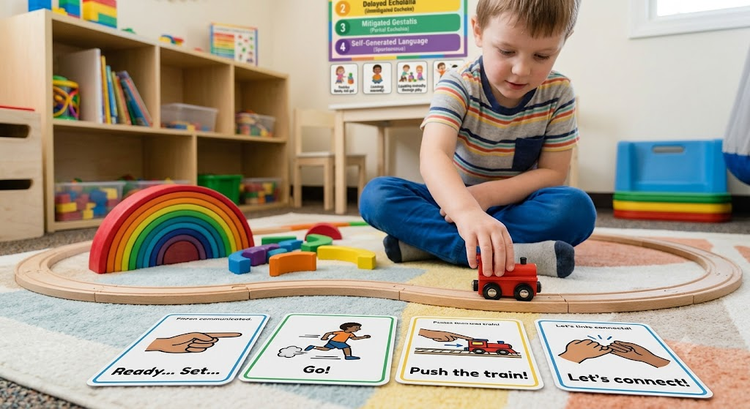
At Jewel Autism Centre India, our evidence-based GLP therapy approach is designed to support each child's communication development by honoring their natural language learning style. We begin with detailed speech and language assessments to identify the child's gestalt language processing stage, strengths, and functional communication abilities. Based on these findings, therapy programs are individualized and delivered through engaging, play-based sessions that support the child's movement through natural stages of language development — from gestalts, to mitigated gestalts, to self-generated language. Parent involvement and regular progress monitoring are integral to our process, ensuring that communication skills developed in therapy are consistently reinforced at home and lead to meaningful, long-term outcomes. Our therapists use Natural Language Acquisition (NLA) informed models to support flexible expressive and receptive language development. At Jewel Autism Centre India, our GLP therapy process includes:
- Comprehensive speech and language assessment
- Identification of gestalt language processing stage
- Individualized goal setting
- Structured therapy sessions
- Play-based communication training
- Augmentative and Alternative Communication (AAC) when required
- Parent guidance and home practice strategies
- Regular progress monitoring
Why Parents Choose Jewel Autism Centre for GLP Therapy
Parents choose Jewel Autism Centre India for GLP therapy because of our strong commitment to evidence-based practice, structured intervention, and family-centered care. Our GLP therapy programs are designed to deliver measurable communication outcomes through individualized planning, multidisciplinary collaboration, and active parent involvement. With a clear focus on honoring each child's natural language learning style and an integrated autism therapy model, our centres in Kochi and Kottayam provide consistent, high-quality support that helps children build lasting, flexible communication skills for everyday life.
- Multidisciplinary child development approach
- Structured, measurable therapy plans
- Parent involvement and training
- Focus on functional, flexible communication
- Branches in Kochi and Kottayam
- Integrated autism therapy model
Our GLP Therapists

Recognized By Major Gulf & Indian News Platforms







What Parents Say

Aksha Varghese
Really good place for therapy. All sorts of therapy are available. Many changes were observed after coming to this institution. Really good service was available.

Abey Varghese
It is a team approach. Which benefitted the child a lot. Many changes were observed in the child. Activities were also provided for the child to do at home. Really good and thrust worthy institution.

Mini Thomas
Our journey with jewel so far has been very good.Our son has shown good changes with 3 months therapy and we are planning to stay on more .We really appreciate the hard work put by therapists in understanding the child's needs and implementing a goal oriented approach.We high recommend this institute to everyone.

Rihan Jojo
My name is Anu from Palakkad. I brought my 4½-year-old son to Jewel with no speech or eye contact. Within one month, I saw great improvement—he started speaking, sitting better, and even writing letters. I’m very thankful to the caring therapists at Jewel.

Noah Rudra Rahul
Jewel Autism Center has been a wonderful choice for us. We’ve seen great progress in our son. The therapists are professional, caring, and involve parents in goal setting. My son enjoys the sessions, has a strong bond with the therapists, and the center feels like a second home.

Chimi pema Dakpa
Jewel Autism and Child Development Center is an excellent place with highly trained and dedicated therapists. The transparency of allowing parents to observe sessions is truly valuable. My son has shown remarkable progress in a short time, and I’ve also learned a lot as a mother. I’m very grateful to the entire Jewel team for their care and support.

Parvana
I’m grateful to the entire Jewel Autism Development Centre team for their dedication. When we joined, my daughter had poor eye contact, no response to her name, and attention difficulties. After a year of therapy, she has made remarkable progress. Special thanks to all the therapists and staff for their support.

Lionel
Jewel Autism and Development Center has been a great support for our child. In just five months, we’ve seen remarkable progress in communication, participation, and learning. We sincerely thank the management, therapists, and staff and highly recommend Jewel to other families.