
Introduction
Adults frequently expect children to:
- Calm themselves
- Manage frustration
- Control behavior
- Express emotions appropriately
However, self-regulation develops gradually over time.
Children first learn regulation through supportive relationships.
This process is called co-regulation.
What Is Co-Regulation?
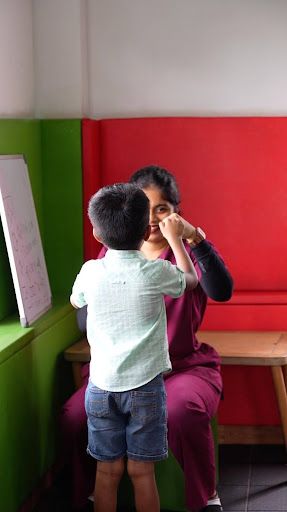
Co-regulation refers to supportive interactions where an adult helps organize a child’s emotional and physiological state.
Examples include:
🟢 Calm voice
🟢 Physical presence
🟢 Predictable responses
🟢 Emotional validation
Why Children Cannot Self-Regulate Alone Initially
Young children and neurodivergent children may have developing abilities related to:
- Executive functioning
- Emotional control
- Attention
- Sensory regulation
During stress, these systems become less efficient.
The Nervous System During Dysregulation
When overwhelmed, children may:
🔴 Cry
🔴 Yell
🔴 Withdraw
🔴 Refuse participation
These behaviors often reflect nervous system activation rather than intentional misbehavior.
Effective Co-Regulation Strategies
🟢 Stay calm yourself
Children borrow regulation from adults.
🔵 Validate feelings
Examples:
“I’m here.”
“This feels hard right now.”
🟡 Reduce sensory overload
🔴 Keep communication simple
The Role of Occupational Therapy
Occupational therapists support:
- Sensory regulation
- Parent coaching
- Emotional regulation
- Participation skills
Final Thoughts
Children do not suddenly learn self-regulation independently.
Self-regulation develops from repeated experiences of co-regulation.
Because before children can calm themselves, they often need someone to help them feel safe enough to become calm.